


Most families are told to expect a wait for specialist disability accommodation in Sydney. What they’re rarely told is why the wait happens even after approval, or that there’s a fair bit they can do about it in the meantime.
The catch is this: an SDA approval funds a home; it doesn’t hand you one. Somewhere out there the right house has to exist, in a suburb that works for you, built for your design category, and actually be free. Plenty of SDA homes sit empty in the wrong places while the ones people want stay full.
So the real task during the wait isn’t patience. It’s positioning. Here are five ways to put yourself at the front of the queue for the right home.

Why the Wait is so Real in Sydney
Here is the uncomfortable truth: an SDA approval is not the same as an available home. Nationally there are around 12,396 SDA dwellings, or roughly 28,015 places, as at September 2025 (NDIS SDA supply and demand data, September 2025). That sounds like a lot until you look closer. Much of the empty stock sits in outer greenfield estates or in the wrong design category, while demand piles up for well-located homes in the categories people actually need.
New South Wales carries the heaviest load. As at September 2025, 8,027 NSW participants had SDA funding, and more than 3,000 of them were still seeking a suitable home (NDIS SDA supply and demand data, September 2025). Wait times vary enormously depending on your design category and preferred location, and High Physical Support homes in particular can take considerably longer to find.
So the shortage is less about raw numbers and more about matching the right person to the right home. The five actions below are all about improving that match.
Action 1: Get Your Documentation Battle-Ready Now
Providers move fast when a vacancy opens, and the family with paperwork in order almost always wins the spot. Treat this like prepping a home before the tradies arrive: do the groundwork so nothing holds you up later. Make sure you have:
- A current OT housing report that clearly recommends your SDA design category
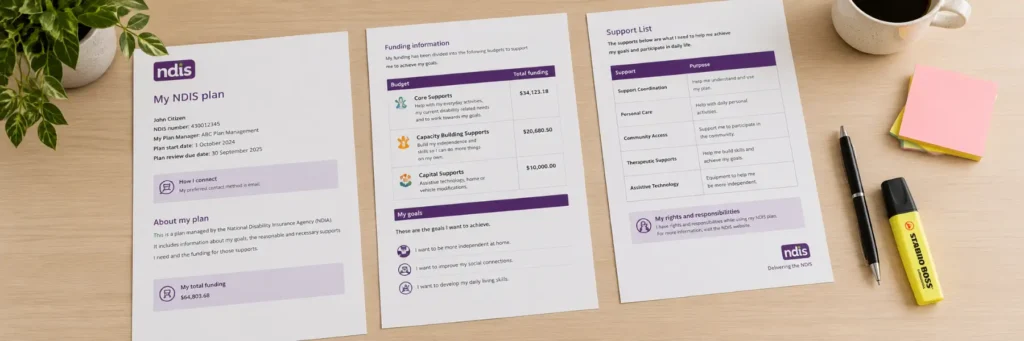
- Your NDIS plan showing SDA funding, with the design category and building type spelled out
- Any assistive technology or home modification needs documented in advance
- A short summary of your support needs you can send providers quickly
If you are unsure what your funded design category means in practice, our Specialist Disability Accommodation page breaks down how DSS homes are built and matched to needs.
Action 2: Cast a Much Wider Net
Do not rely on a single provider or a single listing. The families who move in sooner are the ones checking everywhere:
- The NDIS SDA Finder, which shows enrolled dwellings and current vacancies
- Housing Hub and Nest, two of Australia’s most-used vacancy listing sites
- Several registered providers at once, so you hear about homes early
- Off-market and soon-to-be-completed builds, which often fill before they are ever advertised
It is also worth registering your interest directly with providers you trust. You can ask DSS about current and upcoming accommodation vacancies through our team so you are on the list before a home goes public.
Action 3: Stretch Your Suburb Preferences
This one is hard, but it works. A tight search radius is one of the biggest reasons families stay stuck. Dynamic Support Services runs SIL and SDA homes across the Inner West, Western Sydney and South-West Sydney, and broadening your map even slightly can open up options you would otherwise miss.
Try listing your absolute must-haves (proximity to family, transport, a familiar clinic) separately from your nice-to-haves. Often the deal-breakers are fewer than they first appear, and a suburb one or two postcodes over can mean the difference between waiting another year and moving in next month.
Action 4: Check the Provider is Stable Before You Commit
An SDA dwelling is a long-term home, so the provider behind it matters as much as the bricks. Before you sign, look into:
- Registration history with the NDIS Quality and Safeguards Commission
- Financial stability, since SDA is a long-term investment for the provider too
- Continuity of care, especially how they coordinate the daily support inside the home
A provider with a strong track record gives you real confidence. It is fair to ask about awards, tenure and participant outcomes; a good one will happily share them, as we do on our homepage.
Action 5: Line up Your SIL Supports While You Wait
Here is a distinction that trips up many families: SDA is the building, but SIL is the care that happens inside it. The dwelling itself does not include your day-to-day support, so the wait is the perfect time to sort out who will actually deliver that support once you move in.
Use these months to:
- Explore Supported Independent Living options and how support is staffed and rostered
- Trial a provider through short stays, so you know the fit before it becomes permanent
- Consider respite or short-term accommodation as a bridge, giving you a safe, supported place now while the permanent home comes together
Sorting SIL early means that when the right SDA home appears, everything else is ready to go, and you avoid a second wait for support to be arranged.
The Families who Plan Ahead Get the Better Homes
None of this makes the shortage disappear, but it does change your position in it. Waiting passively tends to mean waiting longest. Preparing your paperwork, widening your search, staying flexible on location and lining up your care puts you at the front of the queue when a suitable home opens up.
If you would like a hand working through any of these steps, or you want to know about current vacancies, get in touch with Dynamic Support Services. We would rather help you plan the wait well than watch you sit through it.
Frequently Asked Questions
How long is the SDA waitlist in Sydney?
There is no official published waitlist figure, and times vary widely by design category and location. Many families report waits of several months to a couple of years, with High Physical Support homes generally taking longer.
What is the difference between SDA and SIL?
SDA is the specialist-built home itself, funded for its accessibility features. SIL is the day-to-day support delivered inside that home. Most participants in SDA need both, funded separately in their plan.
Can I use respite or short-term accommodation while waiting for SDA?
Yes. Respite or short-term accommodation can provide a safe, supported place to stay in the interim, giving you and your family breathing room while the search for a permanent SDA home continues.


