
What is respite care? It’s support that gives a person with disability and the people who usually care for them a short break from their usual care arrangements, while the person keeps getting the support they need. For NDIS participants, respite can happen at home, in the community or during a short stay away.
That’s the plain answer. The rest of this guide explains how respite works under the NDIS as of October 2026, drawing on the NDIS page “What is short-term accommodation” (current as of 1 July 2026), and how to arrange it.
Who respite is really for
Respite is for two people at once: the participant, and the person who usually supports them.
The NDIS describes the purpose of short-term accommodation simply. It supports a participant while the people who usually help them take a short break from their caring responsibilities. That break helps them keep caring afterwards.
So respite isn’t a sign that anyone is failing. It’s part of making care sustainable:
- For carers, it’s time to rest, look after their own health and wellbeing, or deal with other parts of life.
- For participants, it’s continued support from someone else for a while, so their everyday needs are still met.
The three main types of respite support
Respite isn’t one single thing. It generally takes one of three forms.
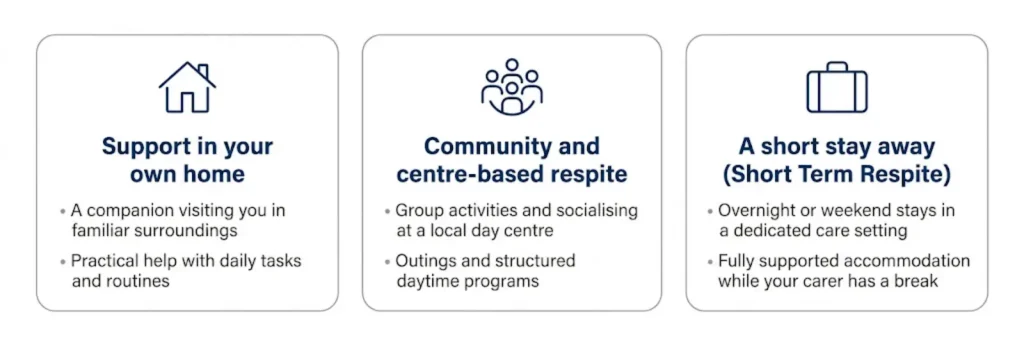
Support in your own home
A support worker comes to your home so your usual carer can take a break, whether that’s for a few hours or overnight. The NDIS mentions a support worker helping in your home as one support option, and notes that short-term accommodation funding can also be used for support to stay in your own home, or a homestay arrangement with a support worker, if you usually need overnight support.
Community and centre-based respite
Some respite happens outside the home, in the community or at a centre, depending on what’s available locally and what suits the participant. The NDIS also points to community and mainstream supports as other options to consider alongside NDIS-funded supports.
A short stay away (short-term accommodation)
This is respite where the participant stays somewhere else for a short time, with support provided during the stay. Under the NDIS, this support is called short-term accommodation (STA). You may also see it called short term respite (STR), a name the NDIS used for a while before changing it back to short-term accommodation for its 2026-27 pricing arrangements. Both names refer to the same support.
The NDIS says short-term accommodation can use standard accommodation, such as a hotel, motel, short stay rental, cabin, cottage, hostel or respite accommodation. It can also be used in a shared or individual accommodation setting.
How NDIS respite care is funded
As of October 2026, the NDIS says short-term accommodation funding can be used for:
- Supports with everyday activities, like showering, cooking and toileting
- Standard accommodation, like a hotel, motel, short stay rental, cabin, cottage, hostel or respite accommodation
- Support to stay in your own home or a homestay arrangement with a support worker, if you usually need overnight support
It can’t be used for items on the list of non-NDIS supports. These include food or meals; cruises, holiday packages, holiday accommodation and airfares; passports, visas and travel insurance; travel costs for family or support workers supporting you on holiday; and theme parks, entertainment, sporting events and conferences.
An NDIS update from July 2026 also notes that the new pricing schedule separates short-term accommodation into different parts. The line items for claiming short-term accommodation are listed in the NDIS pricing schedule.
Who can get short-term accommodation? The NDIS says you may be able to get it if you live with your primary informal supports (like family, friends or a carer) or get daily drop-in support, and get disability-related support from your primary informal support for more than six hours a day. For children under 18, the NDIS may fund it in some situations, for example when their support needs are more than is typical for their age and the break helps the family keep caring.
However your plan is managed, whether self-managed, plan-managed or NDIA-managed, the NDIS says you must spend short-term accommodation funding in line with your plan, so it lasts for the whole length of the plan.
How long can a respite stay last?
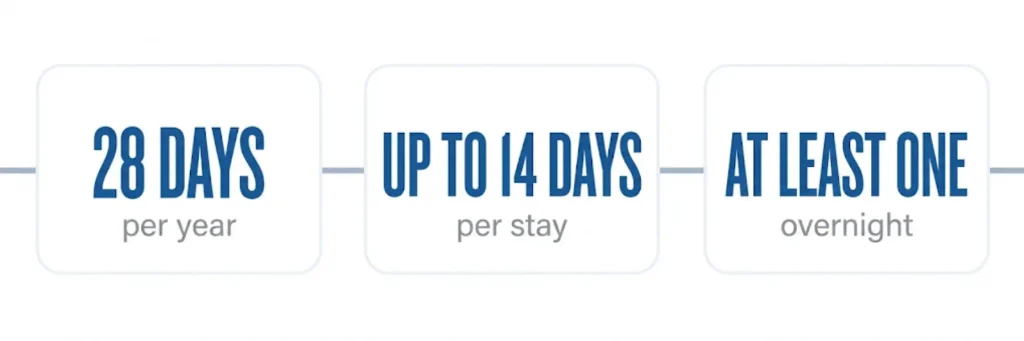
As of October 2026, the NDIS says short-term accommodation is usually funded for up to 28 days per year.
You can use it flexibly. The NDIS gives two examples:
- a block of up to 14 days at a time
- one weekend per month
If your plan doesn’t have the short-term accommodation you need, or your situation has changed, the NDIS says you can ask to change your plan.
The NDIS also says short-term accommodation isn’t for holidays, and doesn’t replace crisis accommodation or normal time apart, like going to school or work.
What a first respite stay is actually like
Every provider does things a little differently, so the best way to know what a first stay will be like is to ask. A good provider will be happy to walk you through it.
Things worth talking through before the first stay:
- The participant’s routine: meals, medication times, bedtime and anything that helps them feel settled.
- Support needs: personal care, communication preferences and any behaviour support.
- Who will be there: which staff will provide support, including overnight.
- The setting: what the accommodation is like, and whether you can visit beforehand.
- Contact during the stay: how and when you’ll hear how things are going.
Starting with a shorter first stay can help everyone get comfortable before planning anything longer.
Respite in Sydney, and how to arrange it
If you think respite would help, the NDIS suggests talking to myNDIS contact about including short-term accommodation in your plan. It also notes there may be other options, such as a support worker at home or community and mainstream supports.
These steps can help you prepare:
- Describe the care your family or carers provide, including how many hours a day.
- Explain why a break is needed, for example a carer’s own health or wellbeing.
- Think about the type of respite that would suit, at home, in the community or a short stay away.
- Talk to a provider about availability and what a stay would involve.
If you’re in Sydney, our respite care services in Sydney team can talk through the options with you. If you’re new to the NDIS, our guide to start your NDIS journey walks through the first steps, and our NDIS FAQs answer common questions.
Frequently asked questions
What is respite care?
Respite care gives a person with disability and their usual carers a short break from their usual care arrangements, while the person keeps getting the support they need.
Does the NDIS pay for respite?
The NDIS may fund short-term accommodation, the NDIS support for a short stay away, if you meet its criteria. It can cover supports with everyday activities and standard accommodation, but not food or meals.
How many days of respite can I get each year?
As of October 2026, the NDIS says short-term accommodation is usually funded for up to 28 days per year, used flexibly, for example in blocks of up to 14 days.
Can respite happen in our own home?
Yes. The NDIS says short-term accommodation can be used in your own home, and also mentions a support worker helping in your home as another option.
What should we ask a respite provider before booking?
Ask about the participant’s routine and support needs, which staff will provide support including overnight, what the setting is like, and how you’ll stay in touch during the stay.
Quick tips before you book
- Write down the participant’s support needs before your first call.
- Ask about staff consistency, including across overnight shifts.
- Book a short first stay to trial it.
- Keep the participant’s routine in writing for the provider.
- Re-check the current short-term accommodation rules on the official NDIS page before planning.
Talk to us about respite
Respite works best when it fits your family’s life. If you’d like to explore respite care services in Sydney, or have questions about what might suit you, contact our team. We’re here to help everyone get the break they need.