
What is SIL? It stands for supported independent living, an NDIS support, not a medical term or a diagnosis, and it’s one of those terms that gets used far more often than it gets explained. In short, it’s funding for a support worker to help or supervise someone at home, around the clock.
Maybe it’s turned up in a new NDIS plan. Maybe a support coordinator mentioned it, or your family is weighing up a move into shared living. Whatever brought you here, it helps to know exactly what you’re looking at. Drawing on the NDIS’s own page on supported independent living (current as of 1 October 2026), this guide unpacks SIL in plain English: who it suits, what it covers and, just as importantly, what it isn’t.
What SIL stands for, and what it is not
SIL stands for supported independent living. The NDIS describes it as funding for a support worker to help or supervise you 24 hours a day, 7 days a week.
Because it’s an acronym, SIL is easy to confuse with other things. Here’s what it isn’t:
- Not a medical term or diagnosis. SIL is a type of NDIS funding, not a condition.
- Not a building. SIL pays for support workers, not housing. The NDIS explains that specialist disability accommodation (SDA) is the housing itself.
- Not an aged care package. SIL is an NDIS support.
- Not a few hours of help. The NDIS says it isn’t SIL if you only need a few hours of support a day or week.
- Not self-managed support workers. It also isn’t SIL if you choose and manage your own support workers by directing, planning and rostering your own supports.
What SIL funding actually pays for
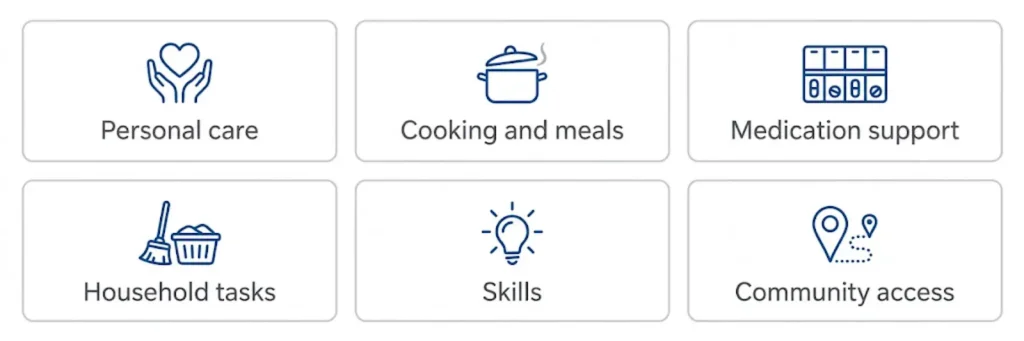
Supported independent living under the NDIS pays for support workers to help with, or supervise, day-to-day tasks in your home. The NDIS gives examples like:
- personal care, showering and getting dressed
- eating and cooking meals
- household tasks, like cleaning
The NDIS says SIL is designed to help you live as independently as possible while building your skills.
What SIL never pays for matters just as much. The NDIS says SIL can’t be used for rent or other day-to-day expenses, like groceries, and it doesn’t pay for the home itself. Your NDIS funds need to be spent in line with the NDIS supports list.
Where SIL happens: shared homes and your own home
SIL support happens within your home. How it’s delivered depends on your needs and your living situation.
- Shared homes: you may share a support worker with housemates who are also NDIS participants.
- Individual support: you may have an individual support worker, depending on how much help you need. The NDIS says SIL may be funded as one-to-one support only in limited situations.
The NDIS also notes that other home and living supports may suit you better if you:
- live alone and SIL funding doesn’t meet your disability support needs
- live with people who aren’t NDIS participants
- want to manage your own supports (a self-directed arrangement)
SIL funding levels, in brief
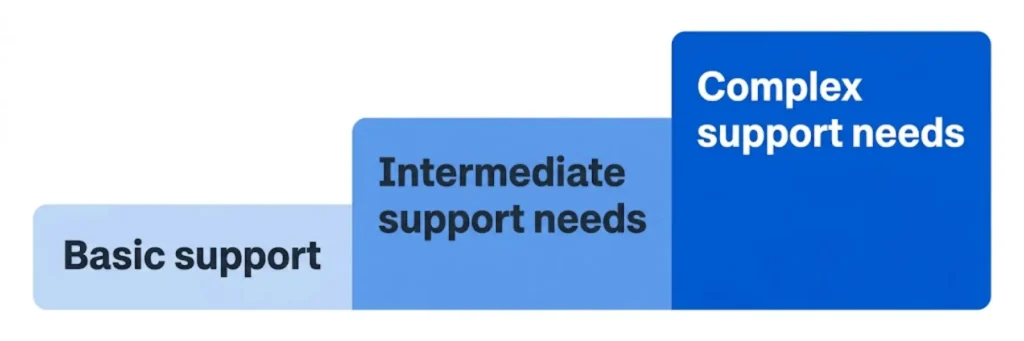
The NDIS says your SIL funding depends on your disability support needs, so the amount of support in your plan reflects how much help you need day to day.
SIL funding is set at different support levels. Rather than repeat the detail here, our guide to standard versus high intensity SIL funding levels explains what your level means in practice.
Who SIL suits, and who it does not
So what is supported independent living best suited to? According to the NDIS, it may be suitable if you need a support worker to:
- stay with you 24 hours a day, including overnight
- help you with daily activities for at least 8 of those hours
- give you some level of help or supervision for the other hours
SIL may not be the right fit if you only need a few hours of support, live alone and SIL doesn’t meet your needs, live with people who aren’t NDIS participants, or want to manage your own supports. In those cases, the NDIS says other home and living supports may suit you better.
The NDIS also says SIL providers must be registered to deliver SIL supports.
How SIL is assessed and added to a plan
If you think SIL might be right for you, the NDIS points to its guide on how to ask for home and living supports. Talking to your NDIS contact is a good place to start.
It can help to prepare:
- A clear picture of your daily support needs, including overnight.
- Which tasks you need help with, and which you’d like to build skills in.
- Your living situation, for example whether you live alone, with family, or with other NDIS participants.
- Your goals for independence, and how SIL would help you work towards them.
If you have SIL funding, the NDIS says you may also have funding for a support coordinator, who can help you find providers so you can live safely in your home.
SIL in Sydney, and where our homes are
If you’re exploring SIL in Sydney, our team supports people to live as independently as possible at home. Learn more about our Supported Independent Living in Sydney, or see where our homes are and check our current accommodation vacancies.
Frequently asked questions
What does SIL stand for?
SIL stands for supported independent living. It’s NDIS funding for a support worker to help or supervise you at home, 24 hours a day, 7 days a week.
Is SIL a medical condition?
No. SIL is a type of NDIS funding, not a medical term, condition or diagnosis.
Does SIL pay my rent?
No. The NDIS says SIL can’t be used for rent or other day-to-day expenses, like groceries.
Can I get SIL and live with my family? The NDIS says other home and living supports may suit you better if you live with people who aren’t NDIS participants. Your NDIS contact can explain what applies to you.
What is the difference between SIL and SDA? SDA is the housing itself, built for people with very high support needs. SIL is funding for support workers to help you at home. Some people have both.
How do I get SIL added to my plan? The NDIS points to its guide on how to ask for home and living supports. Start by talking to your myNDIS contact about your daily support needs.
Quick tips before you explore SIL
- Read your plan’s wording carefully before assuming SIL is or isn’t included.
- Ask providers for a roster of care in writing.
- Visit a home before agreeing to anything.
- Keep our funding levels guide handy at plan review.
Talk to us about SIL
If you have questions about SIL, or want to talk through whether it might suit you or someone you support, contact our team. You’ll also find answers to common questions in our NDIS FAQs.